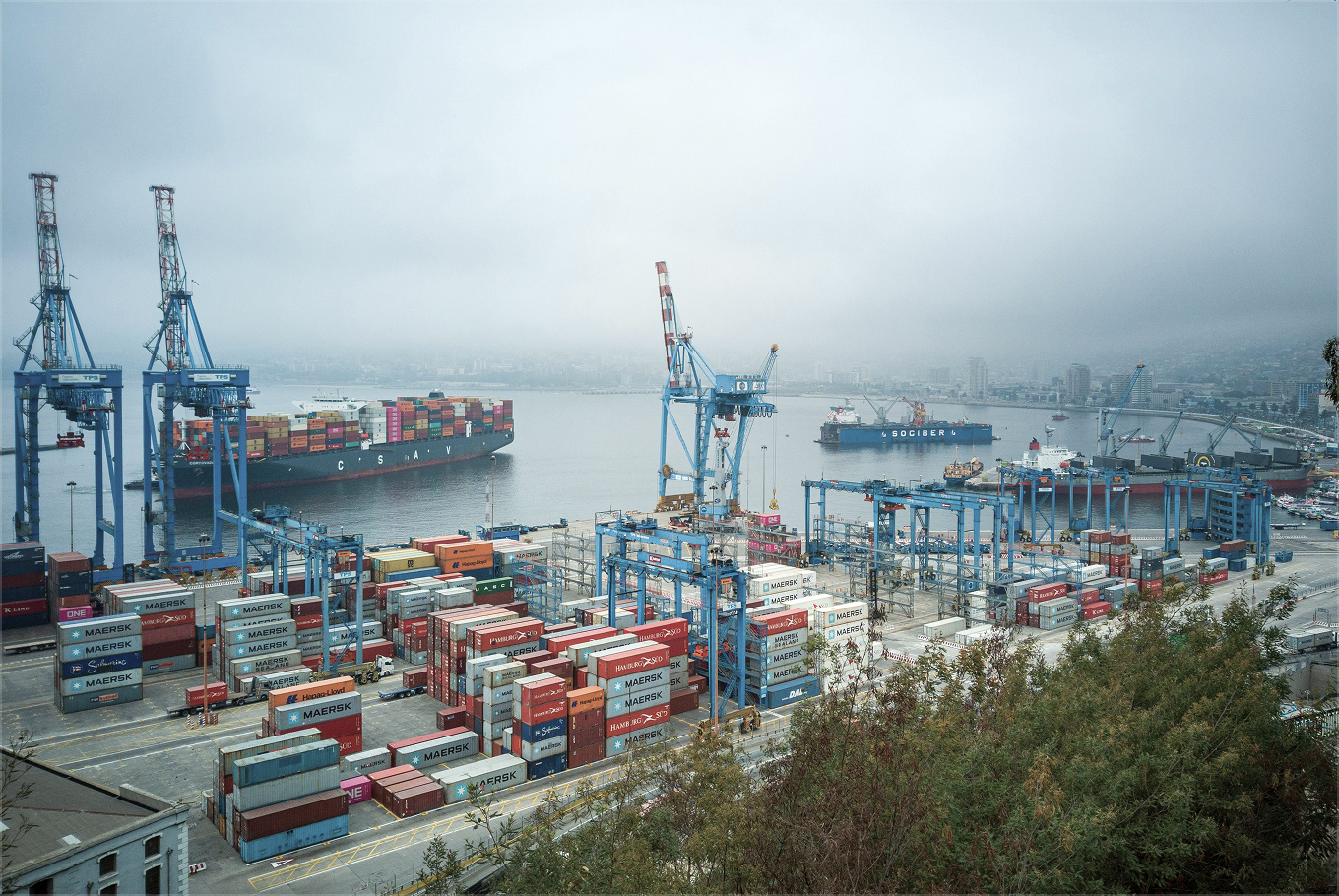
If you work in maritime procurement, you know the drill. You need a mechanical seal for a vessel in Singapore. You send RFQs to three suppliers. Each supplier receives your request with your part number, your description, your specifications. Then they do what they've done thousands of times before: manually map your item to their ERP system, generate a quote, and send it back.
The quote feels free. It's not.
That supplier just spent fifteen to thirty minutes processing your RFQ. They'll do this hundreds of times today, with a hit rate of maybe twenty to thirty percent. The cost of all those unsuccessful quotes? Built into the price you pay when you order. You're not just paying for your quotations, you're subsidizing everyone else's.
We've tried to fix this with procurement platforms, EDI connections, and endless discussions about data standards. But here's what actually happened: we digitized the customer side beautifully while leaving the supplier side drowning in manual work.
The solution seemed elegant: use confirmed transactions to build equivalence chains. If Customer A buys part "aaaa-123" from Supplier C who calls it "cccc-456," that's a confirmed mapping. Do this across millions of transactions, apply transitive property (if A=C and B=D and A=D, then B=C), and you can automatically map items between parties who've never transacted before.
It's brilliant in theory. In practice, it failed for three reasons.
The first was incentives. Procurement platforms make money by being in the middle of transactions. Building true automation that eliminates manual work means reducing their value proposition. Why would they commoditize themselves? The economic incentive pointed toward maintaining just enough friction to stay relevant while appearing to add value.
The second was fragmentation. Even when platforms wanted to build this, they only saw their slice of the procurement world. A supplier working across five different platforms would need five different mapping databases. The fragmentation that mapping was supposed to solve just moved up a layer.
The third was trust. Maritime is a relationship business. Suppliers weren't willing to expose their pricing strategies, lead times, or inventory levels to platforms that also served their competitors. Customers weren't willing to share their vendor performance data. Without trust, the data stayed siloed.
The reason we can solve this now, when platforms couldn't, comes down to three technological shifts that converged in the last few years.
Large language models can finally understand messy data. You don't need perfect standardization when you have models that can recognize "MechSeal-Type-A-Viton-Shore70" and "Mechanical Seal Type A (Viton, 70 Shore)" and "Mech. Seal - A Series, Viton 70SH" are all the same thing. The AI does the fuzzy matching that would have required years of manual catalogue harmonization.
AI agents can now operate inside existing systems without requiring integration. We're not asking suppliers to change their ERPs or adopt new platforms. Our agents read PDFs, extract data from emails, pull information from websites, and push updates to whatever system the supplier already uses. The automation happens invisibly, in the background.
And perhaps most importantly, we can build the data layer without owning the transactions. We're not a procurement platform trying to route all orders through us. We're middleware, connecting existing systems, building the equivalence mappings the industry has needed, but doing it in a way where we add value through automation rather than by being a mandatory middleman.
Let me show you what happens when a shipping company using Narwhal needs to order spare parts, compared to the traditional approach.
In the old way, a procurement officer creates an RFQ in their ERP, then sends it to three suppliers via email or a procurement platform. Each supplier receives the request and manually maps the customer's part numbers to their own system, a process that takes fifteen to thirty minutes per supplier. They generate quotes and send them back. The procurement officer then compares quotes in Excel, creates a purchase order, and sends it to the selected supplier, who manually enters the order into their system. The whole process burns ninety-plus minutes of human effort spread across multiple parties, and that's assuming everything goes smoothly.
With Narwhal, the process transforms. Our AI agent detects the procurement need directly from the PMS or inventory system. It checks the Narwhal Data Layer for existing equivalences. If the items are already mapped, the system auto-generates RFQs with supplier-specific part numbers. If not, the AI reads supplier catalogues and previous quotes to establish the equivalence, which happens in the background. Suppliers with AI agents can auto-quote from their systems, or if they prefer, review pre-filled forms that save them the manual mapping work. The customer receives compared quotes with delivery times, supplier ratings, and true landed cost all in one view. One click generates and transmits the purchase order.
For items we've seen before, this takes thirty seconds. For brand new items where we're establishing the mapping for the first time, it takes about five minutes. But here's the key: we only do that work once. Every subsequent order for that item happens in seconds.
The magic isn't in any single automation. It's in the Narwhal Data Layer, a continuously learning knowledge graph that understands the relationships between everything in maritime procurement. It maps part numbers across customers and suppliers, understands quality specifications and acceptable equivalents, tracks delivery locations and lead times, recognizes pricing patterns and seasonal variations, monitors supplier reliability and performance history, and learns vessel-specific requirements and preferences.
Every transaction enriches this layer. Every manual mapping our engineers do during ambassador programs becomes reusable IP. Every supplier that automates with us makes the next integration faster. This is the transitive property equivalence database the industry has talked about for years, but turbocharged with AI that can understand fuzzy matches rather than requiring exact codes, learn from unstructured data like PDF catalogues and email threads, operate across disconnected systems without requiring integration, protect confidential data while sharing mappings, and self-correct when transactions are rejected or modified.
Here's the thing most people miss: solving data mapping in procurement isn't just about making RFQs faster. It's the wedge that unlocks automation across every maritime workflow.
Once we know that Vessel A needs Part X, and we have delivery time from Supplier Y to Port Z, we can start predicting maintenance needs before failures occur. We can optimize inventory to reduce working capital by thirty to forty percent. We can automate compliance reporting by tracking what's actually on vessels. We can enable predictive analytics on vessel operating costs. We can create digital twins of entire fleets.
The data mapping problem has been the bottleneck preventing maritime from automating for decades. Not because the industry is lazy or backwards, but because the problem was genuinely hard, and the economic incentives for solving it were misaligned.
We're not under the illusion that this happens overnight. Maritime moves slowly, and trust is earned through work, not marketing. That's why we're deploying engineers directly into shipping companies through our Ambassador Program, sitting with operators, automating their highest-pain workflows first, proving value before asking for payment.
But here's what we're seeing after eighteen months of building inside the industry. We're achieving eighty to ninety percent time reduction on spare parts RFQs for repeat items. We're seeing forty to sixty percent fewer manual data entry errors on POs and invoices. Quote turnaround is thirty to fifty percent faster as suppliers adopt automation. And most importantly, customers are getting fifteen to twenty-five percent better pricing as automated comparison enables true market competition.
But the real signal isn't in the percentages. It's when operators start saying "Narwhal already handled it" instead of "did anyone chase the forwarder?" That's when you know automation has crossed from tool to infrastructure.
Every time you send an RFQ, you're paying for the manual work on the other side. Every time a supplier manually maps your part number to theirs, that cost flows back to you.
The question isn't whether maritime procurement should automate. It's whether you want to be the fleet running on legacy workflows while your competitors operate at forty percent lower administrative cost.
The data mapping problem isn't unsolvable. It's just been solved by the wrong people, with the wrong incentives, using the wrong tools. We're building it differently. Not as a platform that wants to own your transactions, but as an operating layer that makes your existing systems talk to each other, with AI agents that learn your business and automate the work that's been burning money for decades.
The ingredients are finally on the table. The technology works. The economics align. The only question is: how much longer will you keep paying for quotations?