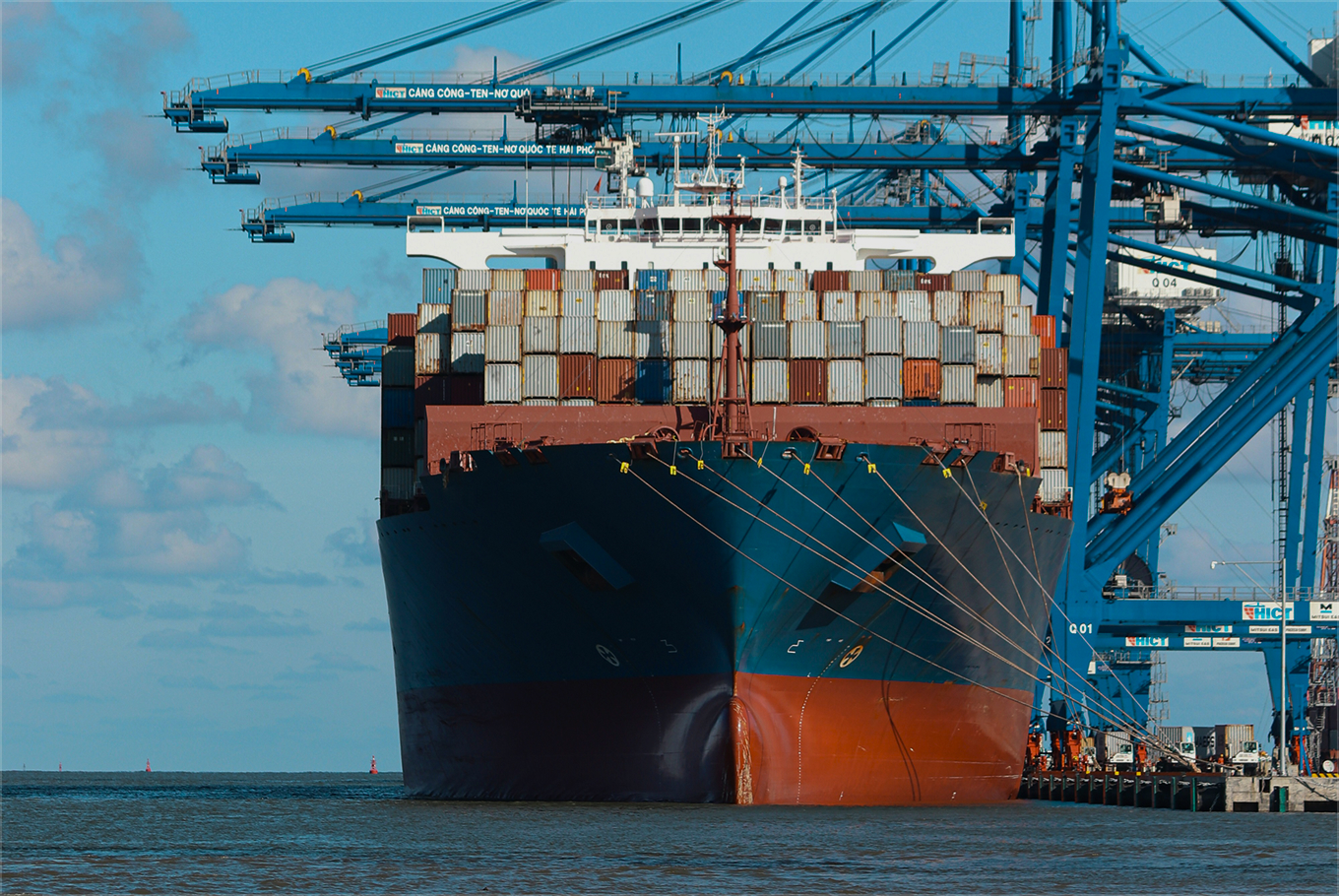
I spent over fifteen years in supply chain and maritime operations before starting Narwhal, and I watched this pattern repeat itself over and over. A technology team would get excited about some new AI capability, run a successful pilot with impressive metrics, present the results to leadership, get approval to scale, and then... nothing. The system would sit unused, or worse, actively circumvented by the operators it was supposed to help.
The problem wasn't the AI, or technology. The problem was that these systems were built by people who understood machine learning but had never spent three AM chasing a supplier in Singapore to confirm whether a critical spare part was actually on a vessel in Brazil. They'd never reconciled three different spreadsheets that all claimed to show vessel inventory. They'd never had to explain to a captain why the shore office was ordering parts that were supposedly already onboard.
Maritime AI fails for the same reason most enterprise software fails: it's built outside the workflow it's meant to improve, then dropped onto operators who are already drowning in systems that don't talk to each other. The AI becomes one more thing to check, one more dashboard to log into, one more source of conflicting information in an ecosystem already fragmented beyond repair.
Here's the dirty secret about maritime AI: it doesn't fail because the algorithms are bad. It fails because the data is a mess.
Consider what happens when you try to deploy predictive maintenance AI on a commercial vessel. The system needs historical maintenance records to learn failure patterns. But those records live in a planned maintenance system on the vessel, an ERP system on shore, supplier warranty databases, email threads with service providers, and handwritten logs from previous chief engineers. The AI can't learn from data it can't access, and it can't access data that doesn't exist in structured form.
Or take route optimization AI. It needs real-time weather data, ocean current information, vessel performance characteristics, fuel prices at destination ports, cargo priorities, and emission zone regulations. Some of this data exists. Some of it is inaccurate. Much of it lives in systems that don't have APIs. The AI makes recommendations based on incomplete information, operators learn not to trust it, and the system becomes shelfware.
The fundamental problem is that maritime operations generate massive amounts of data, but almost none of it is in a form that AI can actually use. Research shows that companies spend six months cleaning five years of maintenance records before their predictive maintenance AI delivers anything actionable. That's not an AI problem. That's a data infrastructure problem masquerading as an AI problem.
At Narwhal, we made a deliberate decision not to build another AI-powered analytics dashboard. The industry has enough of those, sitting unused in browser tabs operators opened once and never looked at again. Instead, we're building the data layer that should have existed all along, the connective tissue that makes other AI systems actually work.
Here's how we think about it. Maritime operations involve dozens of parties using dozens of different systems. The vessel has a planned maintenance system. The shore office has an ERP. Suppliers have their own inventory management platforms. Forwarders use different tracking systems. Port agents use other software entirely. Each party calls the same spare part by a different name, tracks it with different codes, and measures it in different units.
Traditional approaches to this problem try to force standardization. Get everyone on the same platform. Make everyone use the same item codes. Force suppliers to integrate with your ERP. This has been tried for twenty years, and it doesn't work because no single company has enough leverage to force ecosystem-wide changes.
Our approach is different. We sit in the middle and translate. Our AI agents learn how each party describes items, how data flows between systems, and where discrepancies occur. When a procurement officer creates an order using their item code, our system automatically maps it to the supplier's code, generates the RFQ, tracks the shipment across the forwarder's system, and updates vessel inventory when it arrives. Nobody changes their systems. Nobody adopts new item codes. We do the translation work that humans currently do manually, but we do it automatically and in real time.
The other reason maritime AI fails is that it treats operators as obstacles to be automated away rather than experts to be augmented. The systems are designed by technologists who believe that better algorithms will naturally displace inferior human judgment. But maritime operations aren't algorithmic. They're contextual, relationship-driven, and full of edge cases that don't fit neat decision trees.
When we deploy into a shipping company through our Ambassador Program, we don't start by installing software. We start by sitting with procurement officers, watching them work, understanding their actual workflows. We see that they're not just processing transactions, they're managing supplier relationships, negotiating delivery timelines, juggling budget constraints, and handling a dozen exceptions that no AI could predict.
Then we ask: where does the manual work create friction? What data do they need but can't easily access? Which repetitive tasks burn time without adding value? The answers are never "build a predictive model" or "add a machine learning layer." They're things like "I spend three hours a week reconciling inventory discrepancies between our ERP and the forwarder's tracking system" or "I chase suppliers for quote updates because our procurement platform doesn't show me who hasn't responded yet."
So that's what we automate. Not the human judgment, not the relationship management, not the strategic decision-making. We automate the data synchronization, the status checking, the reconciliation work, the quote chasing. The things humans shouldn't have to do but currently must because the systems don't talk to each other.
The result is AI that makes operators more effective rather than obsolete. They spend less time on data entry and more time on supplier negotiations. Less time reconciling spreadsheets and more time optimizing procurement strategy. The AI handles the busywork. The human handles the judgment calls.
The other pattern we see in failed maritime AI projects is opacity. The system makes a recommendation, but doesn't explain why. It flags an anomaly, but doesn't show the underlying data. It suggests a route change, but doesn't clarify what variables drove the decision.
This creates a trust problem. Maritime professionals who've spent decades honing their judgment aren't going to blindly follow recommendations from a black box, especially when getting it wrong means vessel downtime, cargo delays, or safety incidents. Sixty-six percent of maritime professionals worry that overreliance on AI will erode human skills and oversight. That's not technophobia. That's rational caution in a high-stakes environment.
Our approach is radically transparent. When Narwhal flags an inventory discrepancy, we show you exactly which systems disagree and what the specific data points are. When we automate an RFQ, you can see the item mapping we used and correct it if needed. When we synchronize data between systems, we log every change so operators can audit what happened and when.
This transparency does two things. First, it builds trust. Operators understand what the system is doing and why, so they're comfortable relying on it. Second, it creates a feedback loop. When operators spot mapping errors or edge cases we didn't anticipate, they can flag them, and our system learns. The AI gets better because humans are actively teaching it, not passively accepting its outputs.
Here's what nobody wants to say at maritime technology conferences: the breakthrough AI application in shipping isn't autonomous vessels or computer vision or predictive maintenance algorithms. It's data plumbing.
The companies achieving real ROI from maritime AI aren't the ones with the most sophisticated models. They're the ones that invested in foundational data infrastructure first. They cleaned their master data. They established consistent naming conventions across systems. They built integration layers that made disconnected platforms talk to each other. Then, and only then, did they deploy AI on top of that foundation.
This isn't sexy work. You don't get conference speaking slots for "implemented consistent item codes across supplier network." Venture capitalists don't get excited about "built middleware to sync ERP with vessel maintenance systems." But this is the work that actually matters, because it's the work that makes everything else possible.
The data layer is the foundation that everyone else assumes already exists. We're building it because without it, maritime AI will keep failing at the same ninety percent pilot-to-production conversion rate.
The maritime industry isn't going to transform overnight. Autonomous vessels aren't going to replace crews in the next five years. AI isn't going to eliminate the need for experienced operators who understand the complexity of global shipping.
What will happen, gradually and then suddenly, is that fleets running on accurate, synchronized data will operate at structurally lower costs than fleets still burning forty percent of their time on manual reconciliation. Companies with AI-augmented procurement teams will negotiate better rates and avoid stockouts more effectively than those relying on email and Excel. Operators who trust their AI systems because those systems are transparent and demonstrably accurate will make faster, better decisions than those working from incomplete information.
The gap between the AI haves and have-nots won't be about who has the fanciest algorithms. It'll be about who built the data infrastructure that makes AI actually work in production, at scale, across fragmented ecosystems with hundreds of stakeholders using dozens of different systems.
That's the problem we're solving at Narwhal. Not with flashy demos or impressive pilot metrics, but by doing the unglamorous work of building connective tissue between systems that should have been talking to each other all along. We're embedding ourselves in customer operations, automating workflows one at a time, building trust through results rather than promises.
The future of maritime AI isn't autonomous ships navigating empty oceans. It's operators working more effectively because the technology finally understands their actual jobs. That's harder to build, takes longer to scale, and doesn't make for exciting headlines. But it's what actually works, which in an industry built on moving physical goods across physical oceans, turns out to matter more than anything else.